Needle valves, manifolds and double block and bleed valves
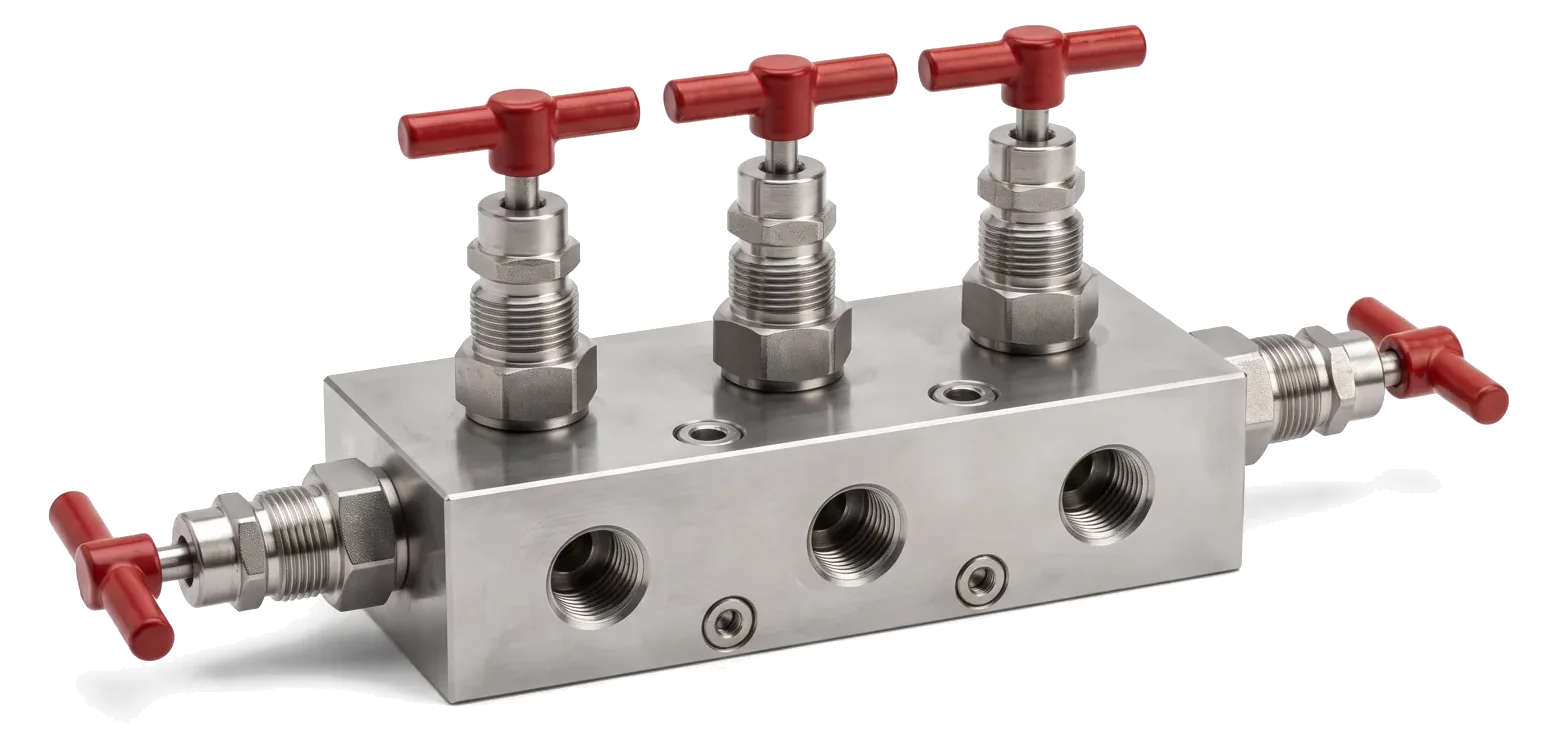
Needle valves, manifolds, monoflanges and double block and bleed, up to 10,000 psi, 316 SS to Inconel.
Overview
Every pressure gauge, transmitter, sample point and chemical injection quill needs a small, reliable valve that isolates and vents without leaking. Instrumentation valves are machined from bar stock in 316 stainless and exotic alloys, and are rated far above the process piping they connect to.
We supply the Oliver Valves range of needle valves, 2-, 3- and 5-valve manifolds for differential pressure transmitters, monoflanges that replace a flange-valve-nipple assembly with a single compact unit, and double block and bleed (DBB) valves for safe isolation of instruments and sample systems.
Materials cover 316 and 316L stainless steel as standard, with duplex, super duplex, Monel, Inconel, Hastelloy and titanium for sour, seawater and chlorinated service. All valves are supplied with 3.1 certification and, where applicable, NACE MR0175 compliance.
Typical applications
- Pressure gauge and transmitter isolation
- Differential pressure flow measurement (3- and 5-valve manifolds)
- Sample points and analyser connections
- Chemical and corrosion-inhibitor injection
- Wellhead and christmas-tree instrumentation
- Hydraulic and pneumatic control panels
Specified in oil & gas fields, petrochemicals, refineries, power & heavy industry.
Specifications
| Products | Needle valves · 2 / 3 / 5-valve manifolds · monoflanges · double block & bleed (DBB) · gauge valves · bleed valves · check valves |
|---|---|
| Pressure rating | Up to 6,000 psi standard; 10,000 psi (690 bar) and above available |
| Sizes | ¼" – 2" (threaded, compression and flanged outlets) |
| Materials | 316 / 316L SS · duplex F51 · super duplex F53 · Monel 400 · Inconel 625 · Hastelloy C276 · titanium · carbon steel |
| Connections | NPT · BSPP · compression (tube) · ASME flanged · hub |
| Standards | ASME B16.34 · NACE MR0175 · API 607 / 6FA fire-safe DBB · PED |
| Options | Anti-tamper heads · locking devices · remote vent · heat tracing |
| Typical uses | Gauges · transmitters · sampling · injection · hydraulic control |
Sizes, classes and materials listed are typical of our stock and supply programme. Other combinations are quoted against your specification. See what is usually ex-stock.
Specifying the right instrumentation valve
Instrument valves sit between the process and the instrument: the needle valve isolates the pressure gauge, the manifold equalises and vents the differential-pressure transmitter, the monoflange replaces the stack of primary isolation valves on a flange, and the double block and bleed valve provides a safe, compact isolation where a line is to be opened. Specify them by the instrument they serve. A gauge needs a single needle or gauge valve with a bleed; a DP transmitter needs a 3-valve or 5-valve manifold; a sample point or chemical injection point needs a DBB with a check element; a flanged take-off needs a monoflange.
Body material is normally 316 stainless; for sour gas state NACE MR0175, for seawater and chloride service specify duplex or super duplex, and for high-temperature steam specify a graphite-packed valve. Pressure ratings run from 6,000 psi (standard) to 10,000 psi and above. Check the end connections against the tubing (compression fittings, NPT, BSPP) and the mounting pattern against the instrument (IEC 61518 for manifolds). Fire-safe testing to API 607 and ISO 10497 is available where the specification requires it.
What to send us for a fast quote
- Valve type: needle, gauge, manifold (2/3/5), monoflange, DBB
- Pressure rating and temperature
- Body material; NACE requirement
- End connections and sizes (NPT, compression, flanged)
- Instrument mounting pattern (IEC 61518) where applicable
- Documents required
Why tenders get rejected, and how we avoid it
Instrument valve schedules on Pakistani gas-field and refinery projects are evaluated against a named manufacturer or an approved list, and the test certificate per serial number is expected. We quote Oliver Valves and other listed manufacturers with the manufacturer's authorisation letter, a per-batch material certificate and a hydrostatic test certificate for each valve. More on API licences, authorisation letters and certificates.
Brands available
Supplied from the manufacturers below, through our sister company Al Hakim in Dubai. Country of origin is confirmed on the certificates of every supply.
Documentation supplied
EN 10204 3.1 material test certificate traceable to heat number, API 598 pressure test report per serial number, certificate of origin and manufacturer's certificate of conformity, with NACE, fire-safe, 3.2 and third-party inspection documents where the order requires them. What every document in our package covers.
Frequently asked questions
What is a monoflange?
A monoflange combines a flange and one or two block valves plus a bleed in a single forged body. It replaces a stack of flange, nipple and valves, reducing weight, leak paths and installation time at instrument connections.
Why specify double block and bleed for instruments?
DBB gives two isolation valves with a vent between them, so a technician can prove isolation before opening the instrument. It is required by most oil and gas operators for hydrocarbon service.
Which manifold do I need for a DP transmitter?
A 3-valve manifold (two isolation, one equalising) for most flow and level applications; a 5-valve manifold adds two vent valves for calibration without disturbing process connections.
Needle valve vs ball valve for instrument isolation?
A needle valve for gauge and transmitter isolation, because it can be cracked open slowly and will not shock the instrument. A ball valve where quick full-bore isolation is wanted, for example on sample and vent lines.
What is a monoflange?
A single forged block that replaces the flanged isolation valve, the nipple and the needle valve at a process take-off. It bolts straight to the process flange, cuts weight and leak paths and is the standard primary isolation on offshore and gas-plant instrument lines.
Related products
For process-size double block and bleed valves with a body bleed, see our ball valves; for the tubing and fittings that connect to instrument valves, ask us for a quotation with the valves.
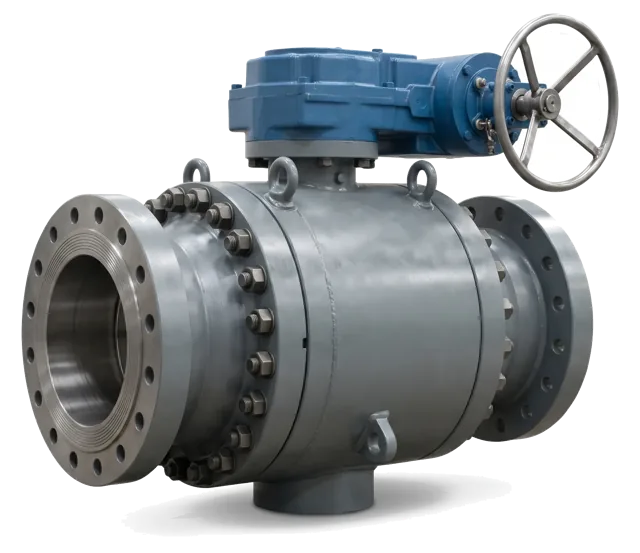
Ball valves
Floating and trunnion-mounted, full and reduced bore. API 6D, fire-safe and NACE, ½" to 48".
Sizes, classes and brands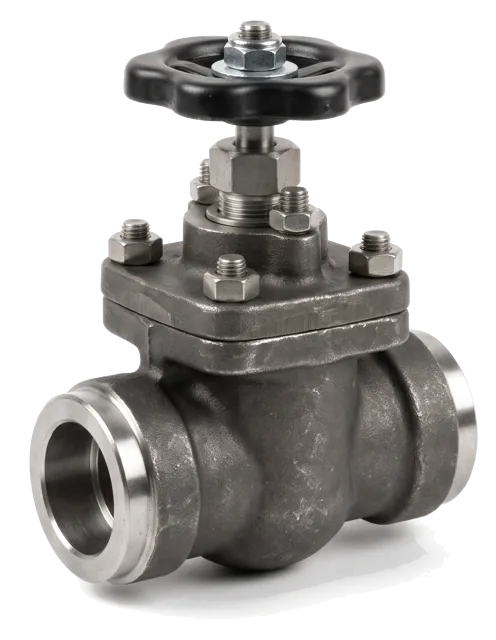
Forged steel valves
Forged gate, globe and check valves to API 602 in A105, LF2, F11/F22, F316 and F51, ¼" to 2".
Sizes, classes and brands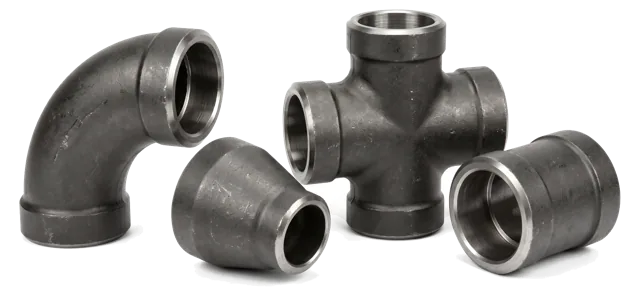
Pipe fittings
Butt-weld elbows, tees and reducers to B16.9; forged socket-weld and threaded fittings to B16.11.
Sizes, classes and brands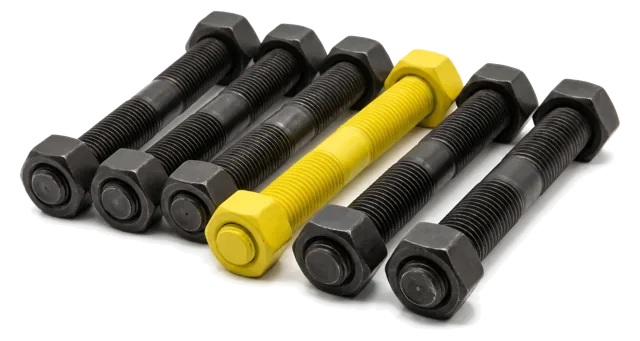
Stud bolts & fasteners
Stud bolts and heavy hex nuts: B7 / 2H, B7M, B8M, L7, plain, galvanized and PTFE coated.
Sizes, classes and brandsRequest a quotation for instrumentation valves
Send size, class, material, quantity and required documents on WhatsApp or through the form. We reply within one working day with availability and lead time.