Check valves that stop reverse flow at pumps and compressors
Swing, dual plate, piston and tilting-disc designs. API 594, API 6D and BS 1868, ½" to 48".
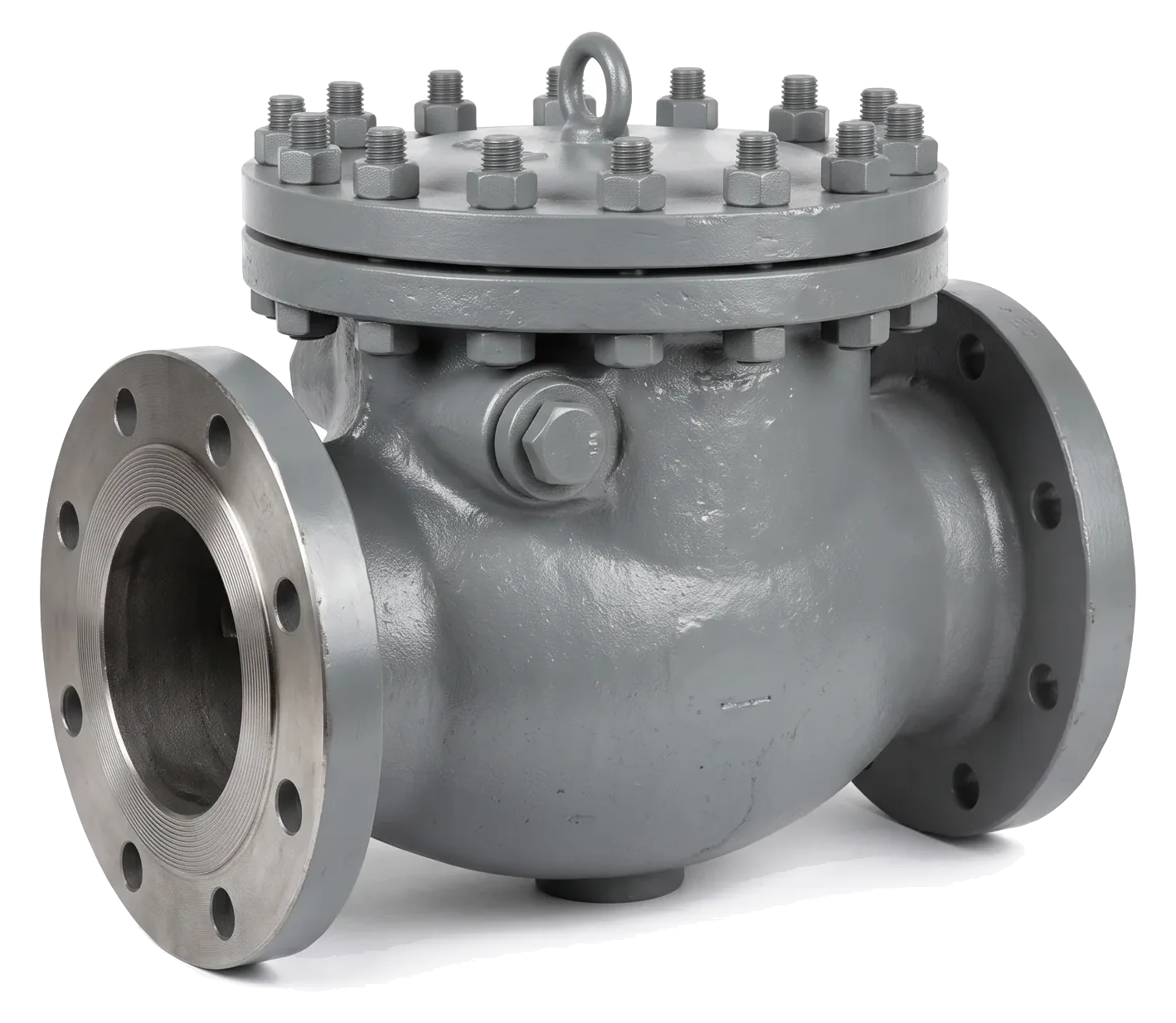
Overview
Check valves open with forward flow and close by themselves when the flow reverses, protecting pumps, compressors and boilers from back-pressure and reverse rotation. The right design depends on the line: swing check for general service, dual plate for compact installation and fast closure, piston or lift check for small-bore and high-pressure lines, and tilting disc where water hammer is a concern.
AM Enterprises supplies all four designs from UAE stock, in cast steel to BS 1868 and API 6D, in wafer and lug dual-plate pattern to API 594, and in forged steel to API 602. Soft-seated and metal-seated options are available, as are spring-assisted and non-slam versions.
Each valve is pressure tested to API 598 and shipped with heat-traceable material certificates and a certificate of origin.
See how a check valve works in the interactive Valve Lab.
Typical applications
- Pump and compressor discharge lines
- Boiler feedwater and condensate systems
- Pipeline block-valve stations (API 6D)
- Cooling-water and fire-water networks
- Gas processing and compression
- Chemical and fertilizer process lines
Specified in refineries, oil & gas fields, power & heavy industry, hydropower & water.
Specifications
| Types | Swing · dual plate (wafer / lug) · piston / lift · tilting disc · ball check |
|---|---|
| Sizes | ½" – 48" (DN15 – DN1200) |
| Pressure classes | ASME 150 · 300 · 600 · 900 · 1500 · 2500 |
| Body materials | A216 WCB · A352 LCC · A217 WC6/WC9 · A351 CF8M · A105 · F316 · duplex · aluminium bronze |
| Design standards | API 594 · API 6D · BS 1868 · API 602 · ASME B16.34 |
| Testing | API 598 · API 6D |
| End connections | Wafer · lug · RF · RTJ · butt weld · socket weld · NPT |
| Options | Spring-loaded · soft seats · NACE trim · retainerless design |
Sizes, classes and materials listed are typical of our stock and supply programme. Other combinations are quoted against your specification. See what is usually ex-stock.
Specifying the right check valve
Every pump discharge, compressor outlet and boiler feed line needs a check valve to stop reverse flow when the machine stops. The question is which type. A swing check (BS 1868, API 6D) has a single hinged disc and the lowest pressure drop; it suits steady flow in larger sizes but slams on pump trip if the flow reverses quickly. A dual plate wafer check (API 594) is short, light and spring-loaded, so it closes before reverse flow builds up, making it the usual choice for pump discharge, cooling water and most process lines. A piston or lift check (API 602, BS 1868) handles small-bore steam and high-pressure service. A tilting-disc or nozzle check is specified where a non-slam closure must be guaranteed on large pumps.
Match the body and trim to the line material and the seat to the fluid: metal-to-metal for steam and hot hydrocarbons, resilient (Viton, EPDM, PTFE) for tight shut-off on water and gas. Dual plate valves should not be used on pulsating or slurry service, and swing checks should be installed with the hinge pin horizontal and at least five pipe diameters downstream of any disturbance. Lever-and-weight or spring assist is available where the valve must open against a low differential.
What to send us for a fast quote
- Size and class
- Type: swing, dual plate, piston, tilting disc
- Body pattern: wafer, lug, flanged, butt weld
- Body, disc and seat material; spring material
- Installation: horizontal or vertical (flow up)
- Documents required
Why tenders get rejected, and how we avoid it
Check valve lines are frequently rejected in Pakistani tenders for a mismatch between the quoted standard and the quoted body: a dual plate valve offered against an API 6D line item, or a swing check offered without the manufacturer's API 594 or API 6D licence. We check the type against the specification before quoting and attach the manufacturer's licence, an authorisation letter and a sample API 598 test report. More on API licences, authorisation letters and certificates.
Brands available
Supplied from the manufacturers below, through our sister company Al Hakim in Dubai. Country of origin is confirmed on the certificates of every supply.
Documentation supplied
EN 10204 3.1 material test certificate traceable to heat number, API 598 pressure test report per serial number, certificate of origin and manufacturer's certificate of conformity, with NACE, fire-safe, 3.2 and third-party inspection documents where the order requires them. What every document in our package covers.
Frequently asked questions
Swing check or dual plate check valve, which should I specify?
Dual plate valves are shorter, lighter and close faster, which reduces water hammer. Swing checks have a fuller bore and are easier to maintain in place. For pump discharge above 6" most clients now specify dual plate; for pigged pipelines swing or piston check is required.
Can a check valve be installed vertically?
Swing and tilting-disc valves are for horizontal lines or vertical lines with upward flow. Dual plate and spring-loaded piston checks can be installed in any orientation.
Do you stock stainless and duplex check valves?
Yes, CF8M and CF3M are stock items; duplex and super duplex are available on short lead time.
Swing check or dual plate check valve?
Dual plate for pump discharge, cooling water and most process lines: it is shorter, lighter and closes fast. Swing check for large, steady flows and viscous or dirty fluids where a clear bore matters more than speed of closure.
What is a non-slam check valve?
One whose disc closes before the reverse flow accelerates, so there is no water hammer. Spring-loaded dual plate, tilting-disc and nozzle check valves are all non-slam designs; a plain swing check is not.
Related products
Check valves are usually ordered alongside the isolation valve they protect: see our gate valves for pump suction and discharge isolation, and ball valves for gas and pipeline service.
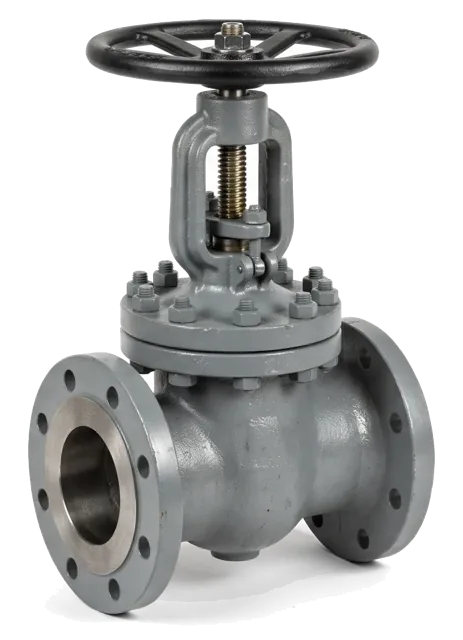
Gate valves
Full-bore isolation with minimal pressure drop. API 600 cast steel and API 602 forged steel, 2" to 48".
Sizes, classes and brands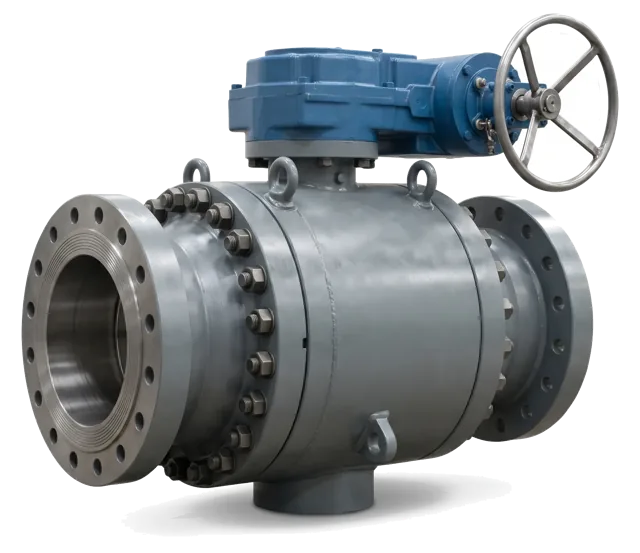
Ball valves
Floating and trunnion-mounted, full and reduced bore. API 6D, fire-safe and NACE, ½" to 48".
Sizes, classes and brands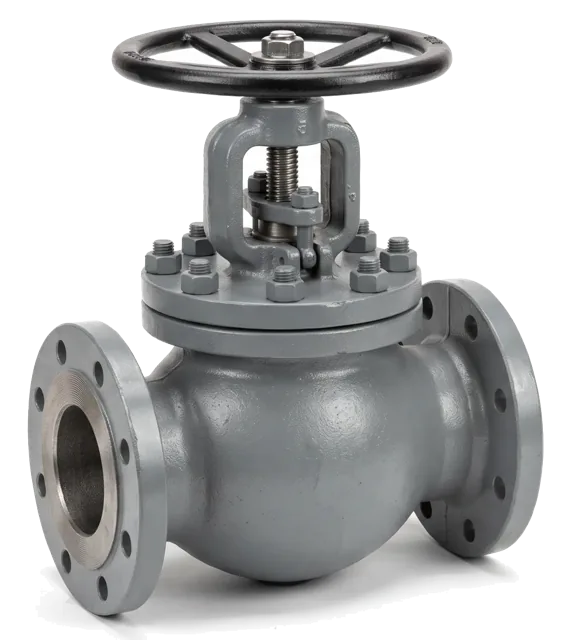
Globe valves
Stable throttling for steam, fuel and process lines. Cast and forged, ½" to 24".
Sizes, classes and brands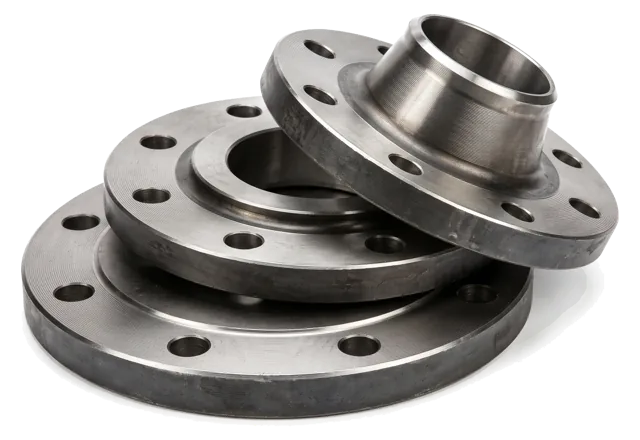
Flanges
Weld neck, slip-on, blind, socket weld, threaded and lap joint, Class 150 to 2500, RF and RTJ.
Sizes, classes and brandsRequest a quotation for check valves
Send size, class, material, quantity and required documents on WhatsApp or through the form. We reply within one working day with availability and lead time.